Perfect Baked Potato
Crispy on the outside, fluffy on the inside-a classic baked potato that's simple and delicious. Perfect as a side or topped with your favorite fixings!

Perfect Baked Potato: Crispy Skin, Fluffy Inside
There is something undeniably comforting about a perfectly baked potato. It's a humble side dish, yet when executed correctly, it transforms into the star of the dinner table. For years, I struggled with potatoes that were either too dense, soggy from being wrapped in foil, or just lacking that quintessential crunch on the outside. But after countless tests in the kitchen-and quite a few family dinners where my husband and mother-in-law served as my eager taste testers-I finally cracked the code.
Today, I'm sharing the definitive method for achieving the perfect baked potato. We are talking about a skin so crispy it shatters when you bite into it, giving way to an interior that is unbelievably light, fluffy, and ready to soak up your favorite toppings. This isn't just a recipe; it's a technique that will elevate your weeknight dinners and impress your guests. Let's dive into the details.
The Foundation: Choosing the Best Potato for Baking
The journey to the perfect baked potato begins long before you turn on the oven; it starts in the produce aisle. Not all potatoes are created equal, and using the wrong variety is the most common mistake home cooks make.
For the quintessential fluffy interior, you must use Russet potatoes (often labeled as Idaho potatoes). Russets are high in starch and low in moisture. When subjected to the dry heat of the oven, this high starch content breaks down and expands, creating that coveted mealy, fluffy texture. Waxy potatoes, such as Yukon Golds or red potatoes, have higher moisture and lower starch content. While they are fantastic for roasting or mashing, they will yield a dense, creamy baked potato rather than a fluffy one.
When selecting your Russets, look for potatoes that are uniform in size. This ensures they all finish baking at the exact same time. They should feel firm to the touch, with smooth skin free of green spots, deep eyes, or sprouts.
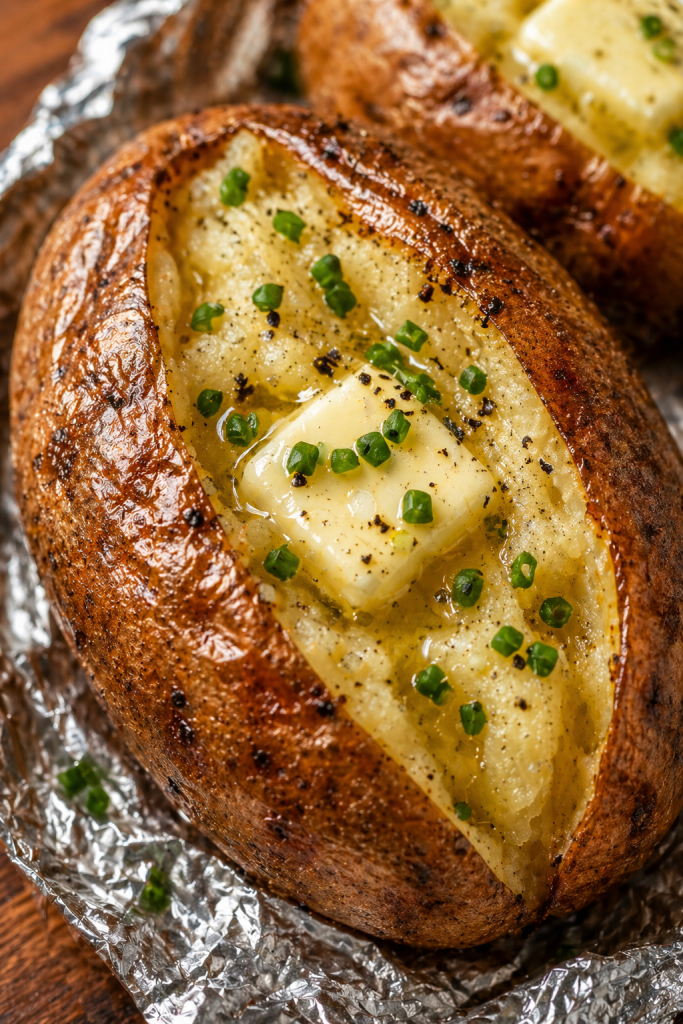
Essential Preparation: Wash, Dry, and Pierce
Once you have your pristine Russet potatoes, proper preparation is key.
1. Scrub Thoroughly: Potatoes grow in the dirt, and since we are aiming for a crispy, delicious skin that you will actually want to eat, getting them perfectly clean is non-negotiable. Scrub them under cold running water with a vegetable brush.
2. Dry Completely: This is a crucial step for achieving crispy skin. Any residual moisture on the outside of the potato will create steam in the oven, leading to a soggy exterior. Use a clean dish towel or paper towels to thoroughly dry each potato.
3. Pierce the Skin: Do not skip this step! Using a fork, prick the potato 6 to 8 times all over. As the potato bakes, the moisture inside turns to steam. If that steam doesn't have an escape route, the potato can literally explode in your oven. Piercing creates tiny vents, allowing the steam to release slowly and ensuring a fluffy interior.
The Great Debate: To Foil or Not to Foil?
If you grew up eating baked potatoes, there's a good chance they came wrapped in aluminum foil. It is a very common practice, often used in restaurants to keep potatoes warm for extended periods. However, if you want a truly perfect baked potato, leave the foil in the drawer.
Wrapping a potato in foil traps the moisture that is trying to escape. Instead of baking in dry heat, the potato essentially steams in its own juices. The result is a wet, soggy skin and an interior that is closer to boiled than baked.
For that signature crispy, shatteringly delicate skin, the potato needs to be exposed to the hot, circulating air of the oven. We want to roast the skin, not steam it. Save the foil for storing leftovers; your potatoes deserve better.
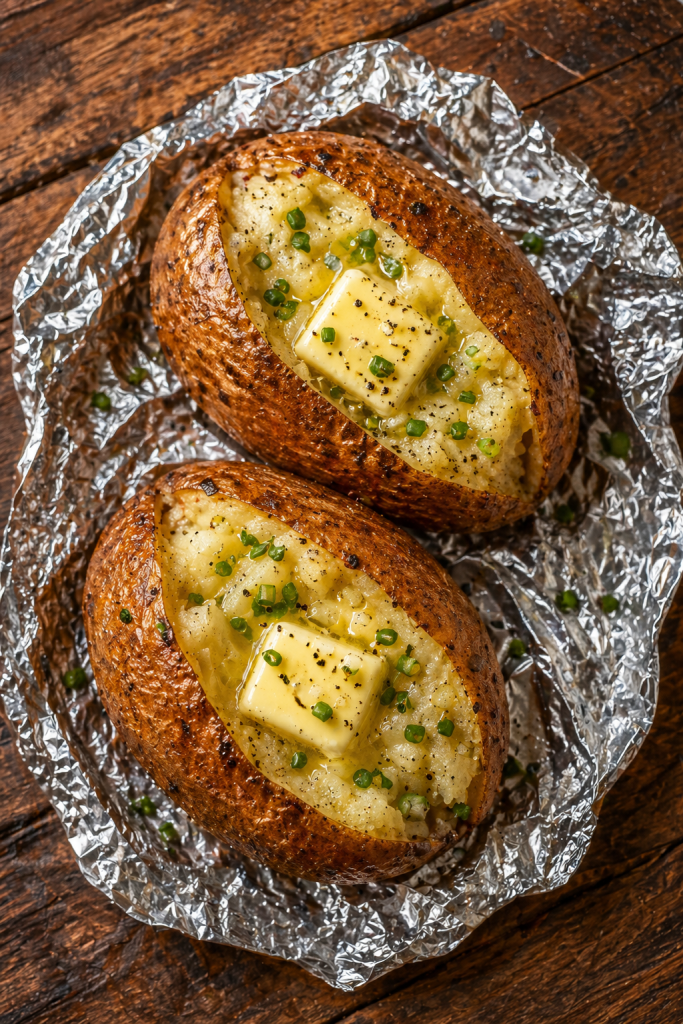
The Secret to Crispy Skin: Oil and Salt
While the potato is baking naked (without foil), we need to give the skin a little help to achieve maximum crispness and flavor.
The Oil: Rubbing the outside of the potato with a high-smoke-point oil is essential. I prefer using avocado oil, canola oil, or even regular olive oil (not extra virgin, as the heat is too high). The oil conducts heat, frying the skin slightly as it bakes.
The Salt: After oiling, generously coat the potatoes in coarse salt, such as Kosher salt or flaky sea salt. The salt does two things: it draws out even more moisture from the skin to enhance crispness, and it seasons the potato beautifully. A potato has a lot of mass, and salting the outside ensures that every bite, including the skin, is perfectly flavored.
Achieving the Perfect Bake: Time and Temperature
Patience is a virtue when it comes to baked potatoes. You cannot rush perfection.
The Temperature: A hot oven is necessary to crisp the skin while cooking the inside thoroughly. Set your oven to 400°F (200°C). This is the sweet spot. Too low, and the skin won't crisp; too high, and the outside might burn before the center is tender.
The Technique: Place the prepared potatoes directly on the middle oven rack. This allows the hot air to circulate completely around the potato, cooking it evenly from all sides. To catch any potential drips of oil, place a baking sheet on the rack below.
The Time: A medium-to-large Russet potato will typically take 45 to 60 minutes. You'll know they are done when the skin is dry and crispy, and a fork or paring knife slides easily into the center with absolutely no resistance. The internal temperature should reach between 205°F and 210°F.
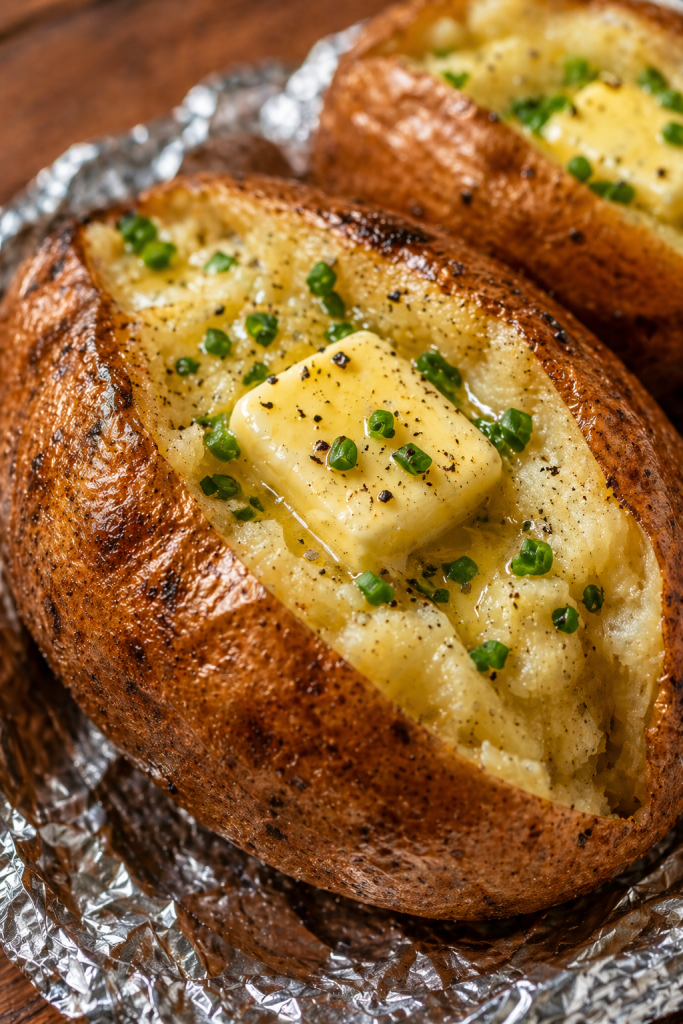
The Art of the Open: How to Serve
How you open the potato matters just as much as how you bake it. If you simply slice it in half with a knife, you compress the fluffy interior you just worked so hard to create.
Instead, take a sharp serrated knife and make a shallow, lengthwise cut across the top of the potato. Then, using both hands (protect your fingers with a towel, as it will be piping hot!), gently squeeze the ends of the potato toward the center. This motion forces the potato to burst open, maximizing the exposed surface area and perfectly fluffing the interior, getting it ready for butter and toppings.
Ultimate Baked Potato Topping Ideas
A perfect baked potato is a blank canvas. While a simple pat of butter, a dollop of sour cream, and a sprinkle of salt and freshly ground black pepper are classic for a reason, don't be afraid to get creative.
- The Loaded Classic: Sharp cheddar cheese, crispy crumbled bacon, sour cream, and fresh chives.
- Chili Cheese: Top with a hearty scoop of your favorite chili and a handful of shredded Monterey Jack cheese.
- Broccoli and Cheddar: Steamed broccoli florets smothered in a rich, homemade cheese sauce.
- Tex-Mex: Black beans, corn, salsa, avocado slices, and a squeeze of fresh lime juice.
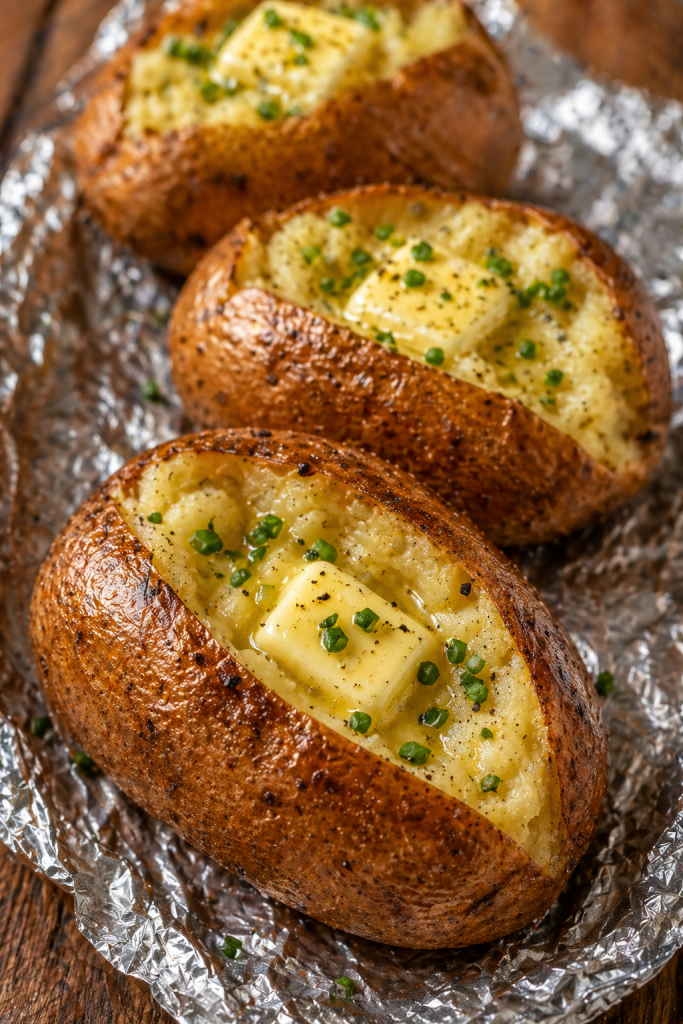
Frequently Asked Questions
Can I make baked potatoes in the air fryer? Yes! The air fryer is fantastic for this. Cook at 400°F for about 40-50 minutes, following the same oil and salt method. The convection heat makes the skin incredibly crispy.
Can I bake potatoes in the microwave? While you can microwave a potato in a pinch (it takes about 8-10 minutes), you will completely sacrifice the crispy skin. If you are short on time, microwave it for 5 minutes to start the cooking process, then transfer it to a 400°F oven for 20-30 minutes to finish and crisp up.
How do I store and reheat leftovers? Store leftover baked potatoes in an airtight container in the refrigerator for up to 4 days. To reheat and maintain crispness, place them in a 350°F oven or air fryer until warmed through. Avoid the microwave if you want to keep the skin intact.
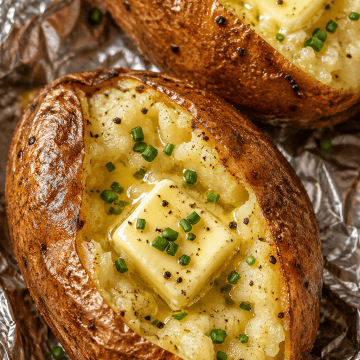
The Perfect Baked Potato
Ingredients
- 4 Medium-to-Large Russet Potatoes uniform in size
- 1 tablespoon Olive Oil Avocado Oil, or Canola Oil
- 1 tablespoon Coarse Kosher Salt or Flaky Sea Salt
- Butter Sour Cream, Chives, and Black Pepper (for serving)
Instructions
- Preheat the Oven: Preheat your oven to 400°F (200°C). Position a rack in the middle of the oven, and place a baking sheet on the rack below it to catch any oil drips.
- Wash and Dry: Thoroughly scrub the potatoes under cold water to remove any dirt. Dry them completely with a paper towel or clean dishcloth. This is essential for a crispy skin.
- Pierce the Potatoes: Using a fork, prick each potato 6 to 8 times all over. This allows steam to escape during baking.
- Oil and Salt: Rub the exterior of each potato lightly with oil until completely coated. Generously sprinkle the coarse salt over the oiled potatoes, pressing gently so it adheres to the skin.
- Bake: Place the potatoes directly onto the middle oven rack. Bake for 45 to 60 minutes. The potatoes are done when the skins are dry and crispy, and a knife pierces the center with no resistance.
- Fluff and Serve: Remove from the oven. Carefully make a shallow, lengthwise slit down the top of each potato. Using a kitchen towel to protect your hands, gently squeeze the ends toward the center to pop the potato open and fluff the inside.
- Garnish: Serve immediately with a generous pad of butter, sour cream, black pepper, and your favorite toppings.